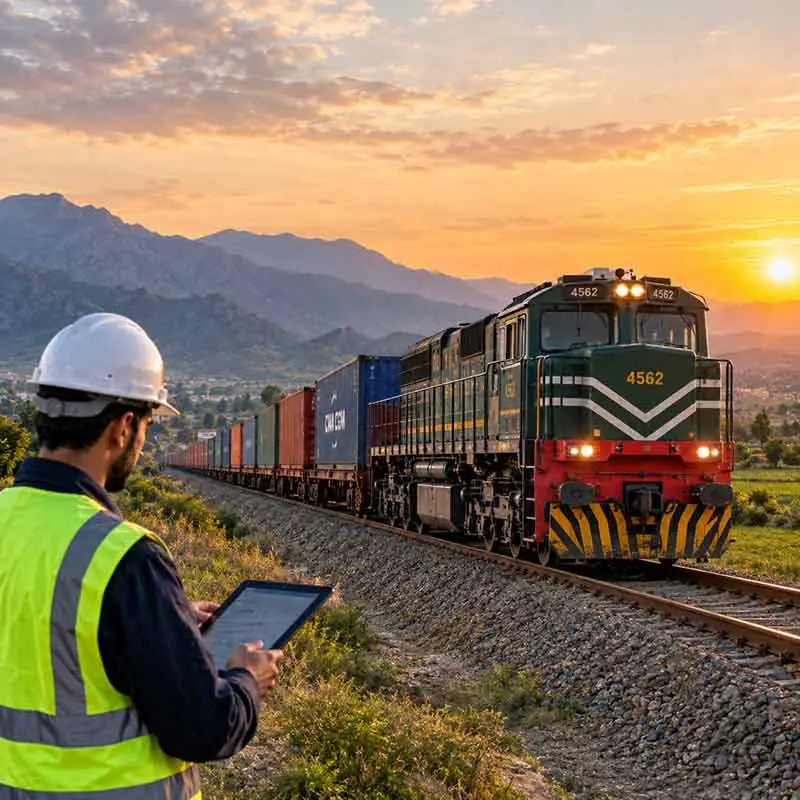
Rail freight can be considered for suitable cargo movements where rail transportation is available and aligns with the shipment requirements. Availability depends on route, cargo and current operational arrangements.
Rail freight depends on origin, destination, cargo type, schedule and available rail service. Confirm route availability before booking.
We assess the shipment requirements before coordinating an available rail movement.
Rail freight is the transportation of cargo by train. It is often used for long-distance overland movement of containers, bulk commodities, and heavy goods. The Mart Logistics coordinates rail freight and multimodal connections where available.
Cost depends on route, container type, weight, rail/terminal charges, drayage, and customs. It can be cost-effective for large volumes over long distances. Request a quote for specific cargo.
Transit time depends on rail schedules, terminal handling, customs, and connections. It is generally slower than air but can be faster or more cost-effective than ocean for certain overland routes. The Mart Logistics reviews route options.
Common documents include a railway bill, commercial invoice, packing list, certificate of origin, and customs documents. Requirements vary by country and commodity.
Yes, The Mart Logistics can coordinate customs clearance for rail freight with relevant parties where applicable.
Rail freight suits containers, bulk commodities, heavy machinery, and non-urgent cargo moving over long distances. It is often used as part of multimodal transport.